Baked Brie in Puff Pastry with Honey and Fig
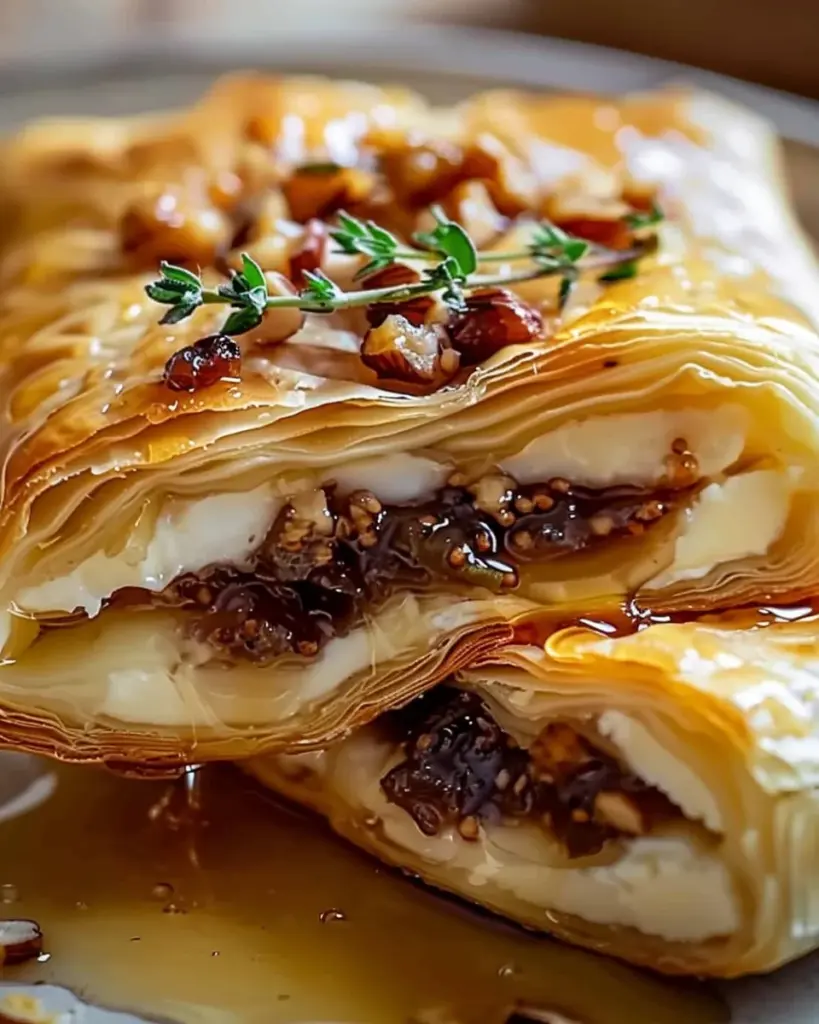
Indulge in a truly elegant appetizer: Baked Brie in Puff Pastry with Honey and Fig. A creamy wheel of brie is wrapped in the flaky layers of puff pastry, then adorned with sweet fig preserves, a drizzle of honey, and aromatic fresh thyme. The result is a golden‑crisp package enclosing gooey, melt‑in‑your‑mouth cheese. It’s perfect for dinner parties, holiday gatherings, or any time you want a special starter that makes a statement.
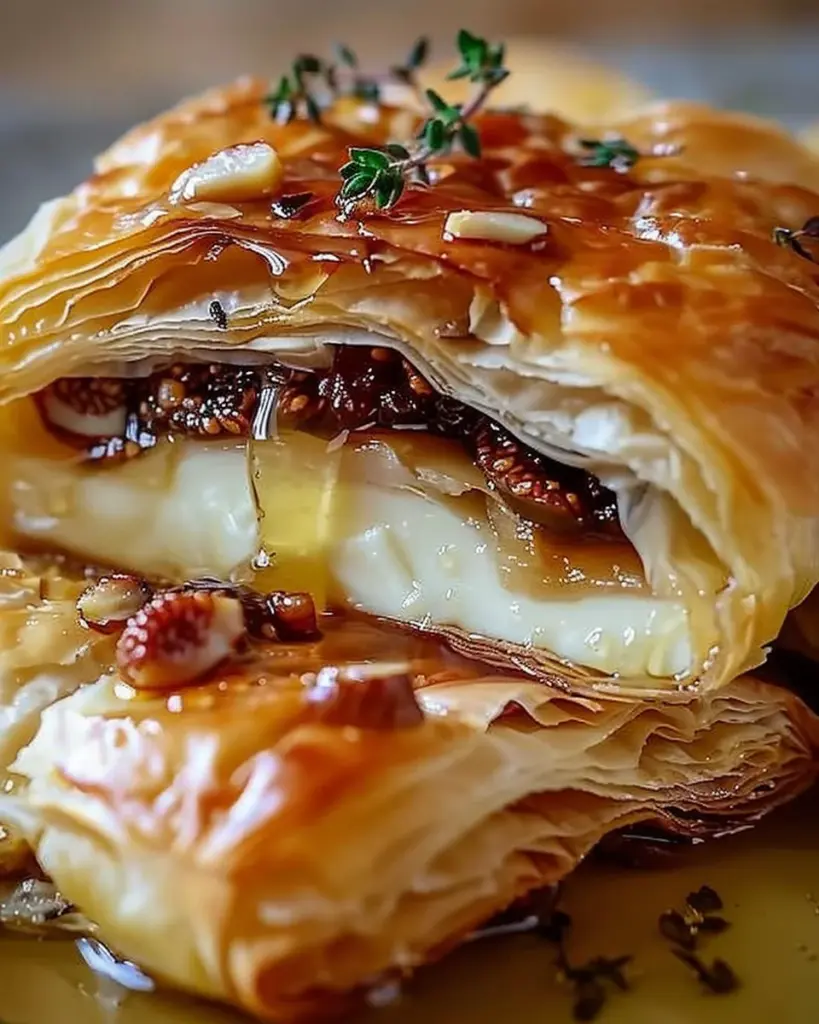
Readers will love how this dish feels gourmet yet comes together with minimal fuss. The sweet‑and‑savory pairing of fig and brie elevates a familiar cheese, and the puff pastry shell adds texture and visual appeal. It’s an impressive treat that doesn’t require hours in the kitchen.
Preparation Phase & Tools to Use
Essential Tools and Equipment
- Rolling pin — to roll out the thawed puff pastry for even thickness.
- Baking sheet lined with parchment paper — to bake the wrapped brie and catch any melted cheese.
- Pastry brush — for brushing the puff pastry with beaten egg (egg wash) to achieve a golden crust.
- Sharp knife — to score the top of the brie (helps even melting) and to help seal the pastry as needed.
- Cooling rack or trivet — to allow the baked dish to rest and not continue cooking from the sheet.
- Serving platter and utensils — to present the finished dish with crackers, bread, or fruit.
Importance of Each Tool
- The rolling pin ensures the puff pastry is evenly rolled and covers the brie completely without being too thick (which could prevent proper baking) or too thin (which might tear or leak).
- A parchment‑lined baking sheet prevents sticking and makes cleanup easy.
- The pastry brush allows for an even application of egg wash, which gives the pastry its attractive golden colour and sheen.
- Using a sharp knife to make the score or crosshatch on the brie rind allows steam to escape and ensures the cheese inside melts uniformly rather than bursting the pastry.
- A cooling rack/trivet keeps the pastry from steaming underneath after removal from the oven and helps maintain crispness.
- The serving platter and utensils contribute to presentation and make the dish inviting and easy to serve to guests.
Preparation Tips
- Thaw the puff pastry sheet in the refrigerator according to package instructions (not fully at room temperature) so it remains cold and manageable when you roll it.
- Lightly flour your work surface so the pastry doesn’t stick and can be rolled to the desired size.
- While you roll, keep the brie chilled until the moment you assemble. A chilled cheese will handle the transfer better and reduce risk of premature melting.
- Preheat the oven fully to the correct temperature before placing the wrapped brie inside, so the puff pastry begins puffing immediately and the cheese melts evenly.
- Score the top of the brie in a crosshatch or shallow lines to allow steam to escape and prevent the puff pastry from bursting.
- After baking, allow a few minutes to rest so the cheese sets slightly — serving it immediately might cause it to run out too quickly.
List of Required Ingredients
Yield: 8 servings
- 1 wheel of brie cheese (8–12 oz)
- 1 sheet frozen puff pastry, thawed
- 1–2 tablespoons honey
- 1–2 tablespoons fig preserves
- 1 tablespoon fresh thyme leaves
- Black pepper, to taste
- 1 egg, beaten
- Coarse sugar, for sprinkling (optional)
- Chopped walnuts or pecans (optional)
Step‑by‑Step Directions
- Preheat the oven to 425 °F (220 °C) and line a baking sheet with parchment paper.
- On a lightly floured surface, roll out the thawed puff pastry sheet into a square large enough to cover the brie with enough edge for sealing.
- Place the brie wheel in the center of the pastry sheet.
- Score the top of the brie (in a crosshatch pattern) to promote even melting.
- Spread the fig preserves evenly over the top of the brie. Drizzle the honey on top. Sprinkle fresh thyme leaves and add black pepper to taste. If using, add chopped walnuts or pecans for extra texture.
- Fold the puff pastry up and over the brie, sealing the edges so the cheese is fully enclosed. Ensure no gaps or openings remain.
- Brush the entire outside of the pastry with the beaten egg (egg wash). If you like a sweeter finish, sprinkle coarse sugar over the top.
- Bake in the preheated oven for about 20‑25 minutes, or until the pastry is golden brown and crisp. (If using a slightly thicker pastry or a larger cheese wheel, the time may increase slightly.)
- Remove from oven and let it rest for about 5 minutes before cutting or serving — this gives the cheese a moment to set and ensures less mess.
- Transfer to a serving platter and serve warm, accompanied by crackers, sliced baguette, fresh fruit (like apple or pear slices), or your choice of accoutrements.
Tips & Variations:
- For a sweeter version, increase the amount of honey or use a sweeter fig preserve.
- If you prefer a savory twist, omit the fig preserves and honey, and instead use caramelised onions, sautéed mushrooms, or roasted garlic.
- If you want to prepare ahead, you can assemble the pastry‑wrapped brie in advance (but hold off on the egg wash) and refrigerate until ready to bake. Brush with egg wash just before baking.
Serving Suggestions
When you prepare this dish—Baked Brie in Puff Pastry with Honey and Fig—you’ll want to think beyond the main item and craft a full, inviting presentation. Here are some suggestions and best practices:
- Serve the wrapped brie warm, right out of the oven. The cheese will be oozy and decadent, and guests will love the dramatic moment of cutting into the pastry and watching it flow.
- Present the dish on a large cutting board or platter so guests can easily access it from all sides. Enlist a sharp knife and a small spatula for clean serving portions.
- Arrange dippers around the brie: slices of baguette or crusty bread, a variety of crackers, apple or pear slices, endive leaves or breadsticks—all of these offer different textures and pair beautifully with melted cheese.
- Consider adding fresh fruit, such as grapes, figs or pear slices, and nuts like walnuts or pecans to introduce contrast in flavour and crunch.
- Think about drinks to match: A crisp white wine, a light sparkling wine or even a dry rosé complement the creamy richness of brie.
- Use garnish: a few sprigs of fresh thyme or rosemary can tie visually to the flavour themes (you already have thyme in the recipe) and add herbal freshness.
Common Mistakes to Avoid & How to Perfect the Recipe
Mistakes to watch for
- Pastry too warm or soft when handling. If the puff pastry becomes overly soft or slightly warmed before baking, the layers may collapse rather than puff up.
- Brie too warm at the start. Putting a room‑temperature wheel of brie into the pastry means it may begin melting prematurely and leak out the sides. Keeping the cheese chilled until assembly helps contain it.
- Insufficient sealing of the pastry edges. If the puff pastry isn’t wrapped securely, heated cheese may escape and create a mess or uneven bake.
- Skipping the egg wash. That golden crust is part of the appeal — without the egg wash the pastry won’t brown as nicely or have that sheen.
- Serving too soon or too late. Serve immediately after the 5‑minute rest so the centre remains gooey. Wait too long and the cheese firms; serve too early and it may be overly runny and difficult to manage.
How to perfect it
- Make sure to thaw the puff pastry just until workable but still cold; roll it on a lightly floured surface quickly so it retains its chill.
- Score the top of the brie (as your recipe indicates) to allow steam to escape — this helps avoid bursting and helps the melt‐evenly.
- After wrapping, rest the assembled pastry for a few minutes in the fridge if you have time — this helps the pastry firm and results in better lift.
- Preheat your oven fully to 425 °F (220 °C) so the pastry begins to puff and crisp immediately on insertion.
- Let the finished wheel rest 5 minutes after baking before slicing — this gives the cheese a little time to set and makes serving neater.
Side Dish Recommendations
Here are 8 side dish ideas that pair beautifully with your main dish—each balances the richness of the brie while complementing that puff‑pastry, honey‑and‑fig flavour profile:
1. Fresh Apple & Pear Slices
Crisp, slightly sweet fruit like apple or pear gives a fresh counterpoint to the rich cheese.
2. Mixed Nuts (Walnuts, Pecans, Almonds)
Offering crunch and a nutty flavour dimension. Especially good if you’re already using walnuts/pecans in the main recipe.
3. Grapes & Fresh Figs
Especially fresh figs (or halved dried figs) echo the fig preserves in the main dish and make for an elegant pairing.
4. Crusty Baguette or Sliced Rustic Bread
Ideal for scooping and spreading the gooey brie. A must‑have.
5. Water Crackers or Seeded Crackers
For a lighter textural contrast, crackers offer a crisp base without competing.
6. Simple Arugula or Baby‑Spinach Salad with Vinaigrette
A fresh, slightly peppery salad offsets the richness and refreshes the palate.
7. Roasted Brussels Sprouts or Asparagus Spears
For a warm, seasonal vegetable side that still pairs nicely. Leftover brie even melts well over such veggies.
8. Dried Fruit & Olive Tapenade Platter
A small board with dried apricots, cherries, olives, and perhaps some pickled components can add variety, making the appetizer spread feel luxurious.
Recipe Tips
- For the best result with this Baked Brie in Puff Pastry with Honey and Fig, be sure your puff pastry remains cold right up until you wrap the cheese. If it warms too much, the fat layers collapse and the pastry won’t puff properly.
- Let the cheese rest for about 5 minutes after baking before slicing. This gives the melted cheese a moment to settle and prevents it from flowing out too quickly.
- Keep your edge seals tight when wrapping the brie. Poorly sealed edges allow the cheese to escape during baking and cause leaking.
- Use fresh thyme, good‑quality fig preserves, and a drizzle of honey to elevate flavour. These elements make this dish feel special.
- For additional crunch and texture, include chopped walnuts or pecans inside before wrapping the brie.
- If you want a slightly richer version, consider swapping the black pepper for a pinch of chili flakes or adding rosemary instead of thyme for herbal depth.
Storage and Reheating Instructions
- Storage: If you have leftovers (though likely you won’t!), store the wrapped or baked brie in an airtight container in the refrigerator for up to 3 to 5 days.
- Reheating: Preheat your oven to about 350 °F (175 °C) and place the brie on a parchment‑lined baking sheet. Heat for ~8–15 minutes until the cheese is warmed through and the pastry crisp‑again. Avoid using the microwave as it tends to make puff pastry soggy.
- Freezing: Freezing is generally not recommended because the texture of the pastry and cheese may suffer.
- Make‑Ahead Option: You can assemble the pastry‑wrapped brie ahead of time, without the egg wash, and refrigerate for up to a day. When ready to bake, add egg wash and proceed as instructed.
FAQs
Q1: Can I remove the rind from the brie before wrapping?
A: Yes you can, but you don’t have to. Many recipes leave the rind intact because it helps hold the cheese together during baking and adds flavour. If you prefer a fully creamy interior, you can trim off just the top of the rind so the cheese melts more freely.
Q2: What’s the best temperature and time for baking?
A: Preheating to around 425 °F (220 °C) and baking for about 20‑25 minutes usually gives a golden, crisp pastry and gooey interior. (Adjust slightly depending on your oven and size of brie.)
Q3: My pastry bottom wasn’t fully crisp—what went wrong?
A: Common causes: the pastry was too warm before baking (so layers didn’t puff), the baking sheet was cold, or the brie had started to leak early. Make sure to use a preheated oven, a parchment‑lined sheet, and chill the assembled pastry briefly if needed.
Q4: Can I use a different jam or preserve instead of fig?
A: Absolutely. Apricot, raspberry, sour cherry or even a pepper jelly all work wonderfully. The fig preserves plus honey is delicious, but feel free to swap for your preferred flavour profile.
Q5: How should I serve it for best impact?
A: Serve warm (just after resting). Place it on a large platter or board surrounded by crusty bread, crackers, fresh fruit (like pear or apple slices), and nuts. The visual of cutting into the pastry and releasing the molten cheese is part of the experience.