Creamy Roasted Garlic Tomato Soup
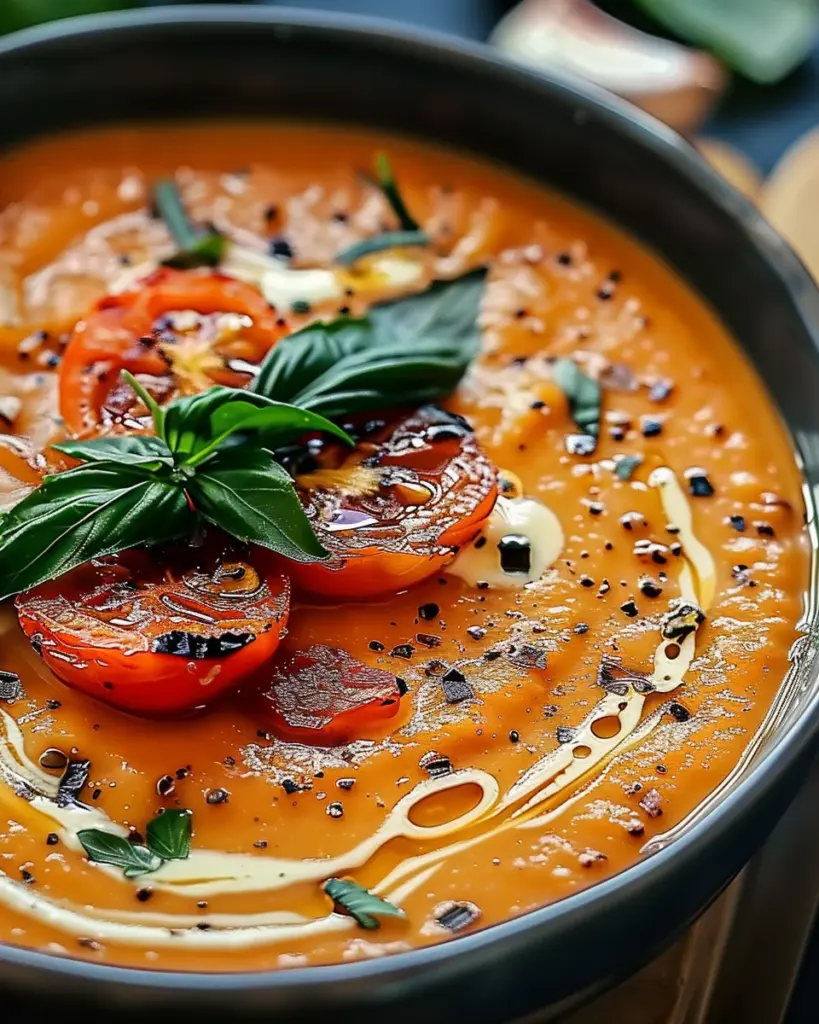
This Creamy Roasted Garlic Tomato Soup is a comforting, flavour‑packed dish that elevates simple ingredients into something special. With oven‑roasted tomatoes and garlic, a touch of creaminess, and fragrant basil, you’ll get a soup that tastes far richer than any canned version. Whether for a cosy dinner, a light lunch, or an elegant starter, you’ll love how easily this comes together and how deeply satisfying each spoonful is.
Why readers will love it
- The roasting process brings out the natural sweetness of tomatoes and mellows garlic into buttery richness.
- It uses fresh, simple ingredients you likely already have, and yet delivers a soup with depth and character.
- A creamy texture gives it comfort‑food appeal, yet it remains bright, fresh and wholesome.
- Very flexible: you can make it dairy‑free by substituting coconut milk, and you can customise herbs or spice for your taste.
- It makes a great dish for gatherings: it’s impressive yet manageable.
Preparation Phase & Tools to Use
Essential Tools and Equipment
- Baking sheet (or sheet pan) lined with parchment paper: used for roasting the tomatoes and garlic.
- Foil (if roasting the garlic head wrapped): helps the garlic caramelise without burning.
- Large pot or Dutch oven: for sautéing onion and for combining/blending the soup.
- Immersion blender (or standard blender): to puree the soup until smooth.
- Measuring cups/spoons: to ensure correct quantities of oil, broth, etc.
- Sharp knife + chopping board: for halving tomatoes, chopping onion.
- Stirring utensil (wooden spoon or heat‑proof spatula).
- Heat‑proof gloves or mitts: when handling hot trays/ingredients.
Importance of Each Tool
- Baking sheet and roasting tools: roasting concentrates flavour by browning; without it, you lose that deep caramelised taste.
- Foil for garlic: protects garlic from burning and allows slow roasting into sweet, spreadable cloves.
- Large pot: allows you to build flavour (onion sautéing) and finish the soup with cream/broth.
- Immersion or standard blender: gives the soup its smooth velvety texture; blending is crucial.
- Measuring tools / knife board: proper preparation ensures balanced taste and smooth cooking flow.
- Heat‑proof gloves/ mitts: safety matters when moving hot trays and handling blended hot liquids.
Preparation Tips
- Preheat the oven fully so the roasting begins immediately for best caramelisation.
- Line your baking sheet for easier cleanup and better heat conduction.
- When cutting the garlic head: trim the top to expose cloves, drizzle with oil, wrap in foil — then roast alongside tomatoes.
- Choose ripe, flavourful tomatoes (Roma or vine‑ripened) since they impact taste heavily.
- While roasting, pay attention: tomatoes should soften and begin to brown; garlic should be soft to the touch.
- When sautéing the onion, do so over medium heat until translucent — avoid browning too much unless you want extra depth.
- When blending hot liquids, especially in a standard blender: leave vent open or lid ajar to allow steam escape (to prevent pressure build‑up and splatter).
- After blending, return soup to pot and simmer briefly to marry flavours and adjust consistency.
- Always taste and adjust salt, pepper, red pepper flakes (if using) at the end.
Ingredients
Yield: Serves about 6 people (1×)
- 2 lbs fresh tomatoes (Roma or vine‑ripened), halved
- 1 whole head of garlic
- 1 small onion, chopped
- 2 tbsp olive oil
- 2 cups vegetable or chicken broth
- ½ cup heavy cream (or coconut milk)
- ¼ cup fresh basil leaves
- Salt and black pepper to taste
- ½ tsp red pepper flakes (optional)
Step‑by‑Step Directions
- Preheat the oven to 400 °F (200 °C). Line a baking sheet with parchment paper.
- Arrange the halved tomatoes on the baking sheet. Drizzle them with 2 tbsp olive oil, season with salt and pepper.
- Cut the top off the garlic head to expose the cloves. Drizzle with olive oil, wrap in foil, and place on the baking sheet alongside the tomatoes.
- Roast everything for approximately 30‑35 minutes, or until the tomatoes are softened and beginning to caramelise, and the garlic is tender.
- Meanwhile, heat a large pot over medium heat. Add the chopped onion and sauté for about 5 minutes until soft and translucent.
- Once the garlic is cool enough to handle, squeeze the roasted garlic cloves into the pot. Add the roasted tomatoes (with their juices), the broth, and the fresh basil leaves.
- Using an immersion blender (or transfer to a standard blender in batches), blend the mixture until smooth. Be careful when blending hot liquids.
- Return the blended soup to heat. Stir in the heavy cream (or coconut milk). Simmer for another 5‑10 minutes. Adjust the seasoning (salt, pepper, red pepper flakes) to taste.
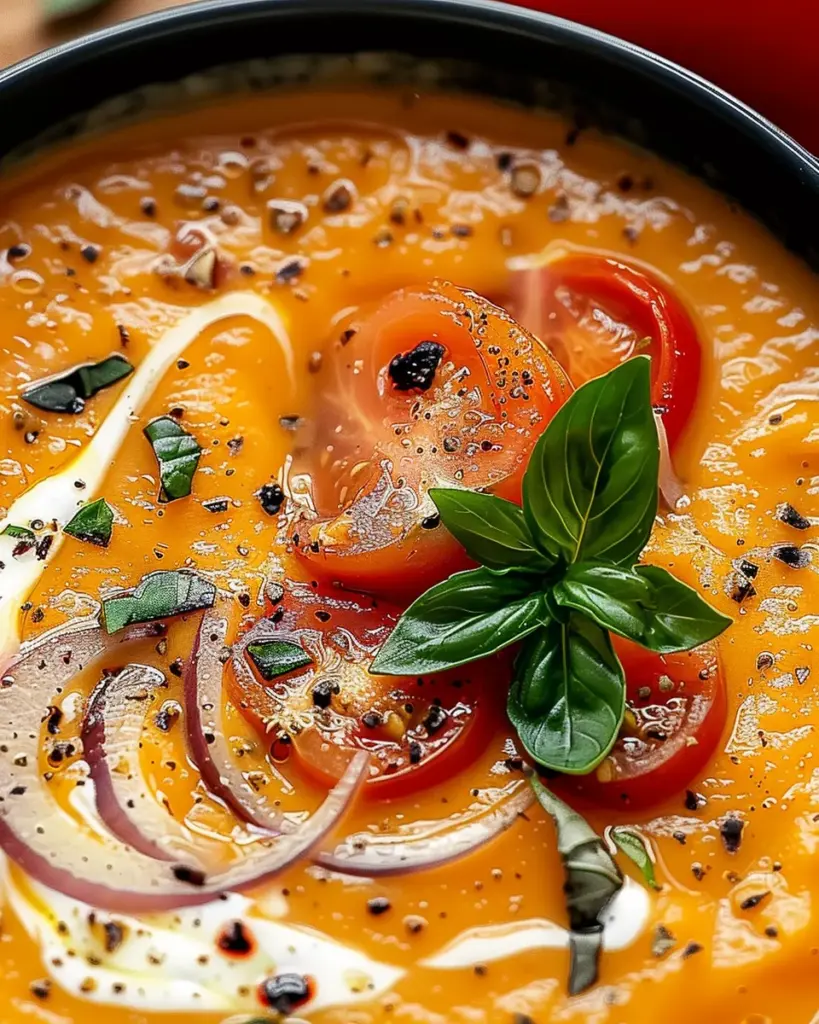
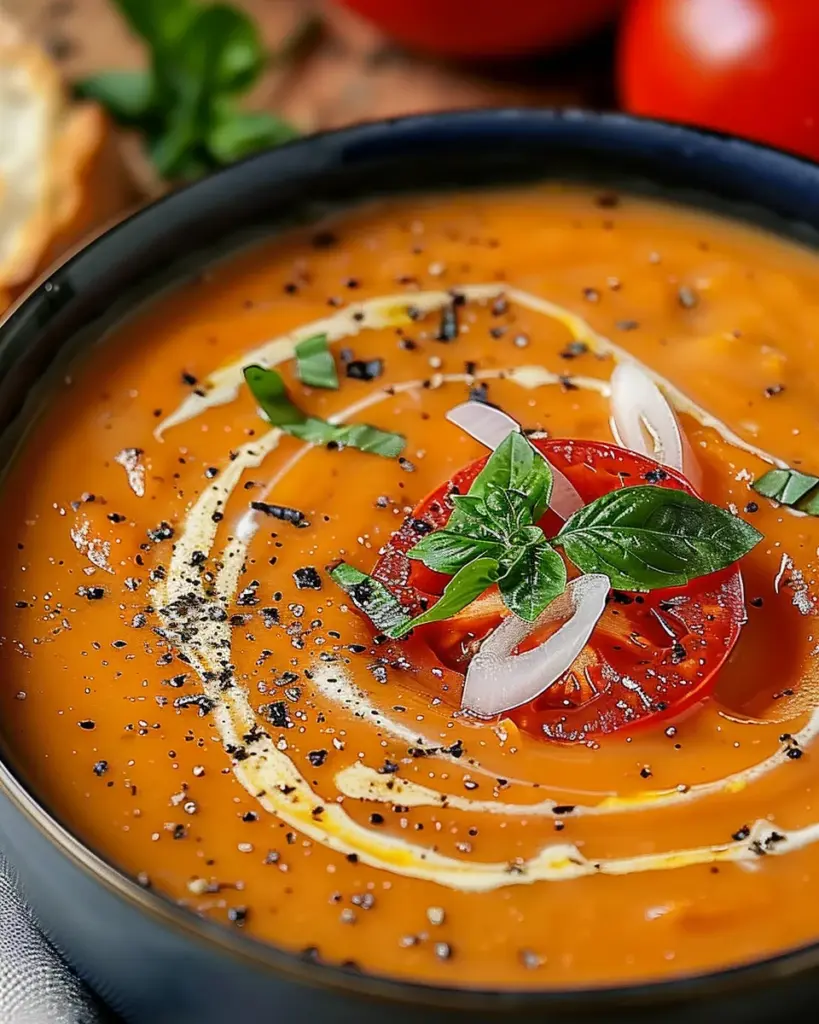
- Serve the soup warm. Garnish with torn basil leaves, cracked black pepper, a drizzle of cream or olive oil, or croutons as desired.
Variations & Tips
- For a dairy‑free version, substitute coconut milk for heavy cream.
- If you like a chunkier texture, blend only part of the soup and leave some roasted tomato bits.
- Want extra depth? Add smoked paprika or a splash of balsamic vinegar before blending.
- If you prefer more heat, increase red pepper flakes or add a pinch of cayenne.
- Use leftover roasted tomato soup as a base for pasta sauce: cool slightly, then stir in cooked pasta and finish with basil and parmesan.
Serving Suggestions
When serving your Creamy Roasted Garlic Tomato Soup, presentation and accompaniment matter. Consider serving the bowl slightly warmed. Then:
- Drizzle a swirl of heavy cream (or coconut milk).
- Sprinkle a few torn basil leaves or fresh herbs on top.
- Add freshly cracked black pepper or red pepper flakes for a bit of heat.
- Serve with a warm crusty bread or a crisp side to complement the creamy texture.
These touches elevate the soup from everyday to memorable.
Common Mistakes To Avoid & How to Perfect the Recipe
Here are frequent pitfalls when making tomato‑based soups (and how to fix them):
- Skipping the roasting step of tomatoes. Roasting deepens flavour by caramelising sugars.
- Using reactive cookware with acidic ingredients. Tomatoes’ acidity can react with certain metals and alter flavour.
- Undercooking the tomatoes and garlic before blending. If vegetables aren’t soft, your blender struggles and texture suffers.
- Not tasting and adjusting seasoning before serving. Fresh ingredients vary, so you’ll want to fine‑tune salt, pepper, and herbs.
- Adding conflicting flavour profiles. Introducing too many competing spices can dilute the clean tomato‑and‑garlic flavour.
To perfect your soup: focus on quality ingredients (ripe tomatoes, good broth), monitor roasting carefully, blend until smooth but not burnt, and finish with seasoning and optional garnishes for impact.
Side Dish Recommendations
Here are eight side‑dish ideas that pair beautifully with your soup. These offer a range from comforting to light, so you can choose based on your meal mood.
1. Classic Grilled Cheese Sandwich
A crisp, buttery grilled cheese—especially on sourdough or with sharp cheddar—complements the creamy tomato soup beautifully. Dunk each bite into the soup for max flavour.
2. Garlic Bread or Herb‑Crusted Baguette
Warm slices of baguette or garlic bread give you something to sop up every last drop of the soup. The garlic echoes the roasted garlic in the soup, tying flavours together.
3. Mixed Green Salad with Vinaigrette
For a lighter side, serve a salad of mixed greens, cucumber, cherry tomatoes and a light vinaigrette. The freshness and crunch contrast the smooth soup nicely.
4. Roasted Vegetables
Roasted carrots, asparagus or zucchini offer a lovely texture variation and an earthy counterpoint to the tomato‑soup richness.
5. Mozzarella Sticks or Fried Cheese Bites
Indulgent and fun, gooey mozzarella sticks or similar fried cheese bites add a playful, rich side for dipping or nibbling alongside the soup.
6. Twice‑Baked Potatoes or Roasted Smashed Potatoes
Potatoes offer a hearty component and soak up the soup delightfully. Go for crisp edges and creamy interiors.
7. Quiche or Savoury Tart
A slice of quiche (e.g., bacon & cheese or spinach & feta) makes the meal more substantial—excellent if you’re serving the soup as part of a brunch or lunch.
8. Cheese & Charcuterie Board
For an elegant touch, set out a small cheese and charcuterie board with crackers, olives and pickles. Guests can nibble while enjoying their soup for a relaxed‑but‑refined meal.
Recipe Tips, Storage and Reheating Instructions
Recipe Tips
- Use ripe, in‑season tomatoes (Roma or vine‑ripened) for the richest flavour.
- When roasting the garlic, ensure the head is tender and fragrant before using — this mellows the harsh raw garlic taste.
- For a dairy‑free or vegan twist, replace heavy cream with coconut milk, and perhaps add a splash of olive oil or cashew cream for richness.
- Blend carefully: when transferring hot soup to a standard blender, vent the lid and hold it with a kitchen towel to prevent steam build‑up and splatters.
- After blending and adding cream, simmer gently (not vigorously) for 5–10 minutes to marry flavours without reducing too much.
- Adjust seasoning just before serving: the sweetness of tomatoes and the intensity of roasted garlic can vary, so taste and add salt, pepper, red pepper flakes as needed.
- For extra depth, consider stirring in a teaspoon of smoked paprika or a light dash of balsamic vinegar just before serving — this can lift the flavour profile.
Storage Instructions
- Let the soup cool slightly at room temperature (no more than 1‑2 hours) before refrigerating. Large quantities can cool faster if placed in a shallow container or in an ice‑bath.
- Transfer the soup into airtight containers and store in the fridge for up to 3 days, since it’s a creamy soup (creamy soups generally last 3 days; clear soups somewhat longer).
- For freezing:
- Allow the soup to cool completely before freezing to avoid raising the freezer temperature.
- Leave some head‑space in the container (liquid expands when frozen).
- It’s best to exclude the cream or heavy dairy when planning to freeze, as dairy can separate or become grainy after freezing. Instead, add cream when reheating.
- Label containers with the date and contents. Use within 3 months for best quality.
Reheating Instructions
- If frozen, thaw the soup in the fridge overnight or use a microwave defrost setting.
- Reheat in a saucepan over medium heat, stirring to prevent sticking. For creamy soups, bring to a gentle simmer rather than a rolling boil.
- If reheating in the microwave, cover loosely to allow steam to escape, and stir halfway through heating for even warmth.
- After reheating, if you omitted cream before freezing, now stir in the fresh cream/coconut milk and warm through gently.
- Avoid reheating more than once, as multiple reheats can affect texture and safety.
FAQs
Q: Can I use canned tomatoes instead of fresh?
Yes. If fresh tomatoes aren’t available, use good‑quality canned whole or diced tomatoes. Adjust roasting time and flavour accordingly, and perhaps reduce stock/broth slightly since canned tomatoes hold extra liquid.
Q: Will freezing affect the texture of the soup?
Freezing may affect texture, especially of dairy components and chunky vegetables. As noted, dairy can separate and vegetables may turn mushy. To mitigate: omit cream before freezing and add when reheating; consider blending fully before freezing to minimise texture change.
Q: Can I make this gluten‑free or vegan friendly?
Absolutely. For gluten‑free, ensure your broth is gluten‑free and skip any bread side dish. For vegan, use vegetable broth and substitute heavy cream with coconut milk, almond‑milk cream, or cashew cream.
Q: How do I store leftover soup safely?
Cool it quickly, store in airtight containers in fridge within 2 hours of cooking, and consume within 3 days. For longer storage, freeze as per instructions above.
Q: Can I add pasta or rice to this soup when reheating?
You can, but for freezing it’s best to add pasta/rice fresh during reheating because they may become over‑soft or mushy if frozen and reheated.
Q: What’s the best garnish or topping for this soup?
Some great garnish ideas: torn fresh basil leaves, a drizzle of cream or good olive oil, cracked black pepper, a pinch of red pepper flakes for heat, or a few crisp croutons or roasted garlic slices.